

Prayagraj Tour Package Top Tourist Attractions , Ever wondered where spirituality meets history in the most magnificent way? Welcome to Prayagraj, formerly known as Allahabad, a city that’s been weaving tales of divinity and heritage for thousands of years. Nestled at the confluence of three sacred rivers, this ancient city isn’t just a destination—it’s an experience that touches your soul.
Why should Prayagraj be on your travel bucket list? Well, imagine walking through streets where emperors once tread, taking a dip in waters considered holy by millions, and breathing in an atmosphere charged with centuries of devotion. From magnificent Mughal architecture to revolutionary history, Prayagraj offers something for every traveler. Whether you’re a spiritual seeker, history buff, or just someone looking to explore India’s rich cultural tapestry, this city has got you covered.
The Sacred Triveni Sangam
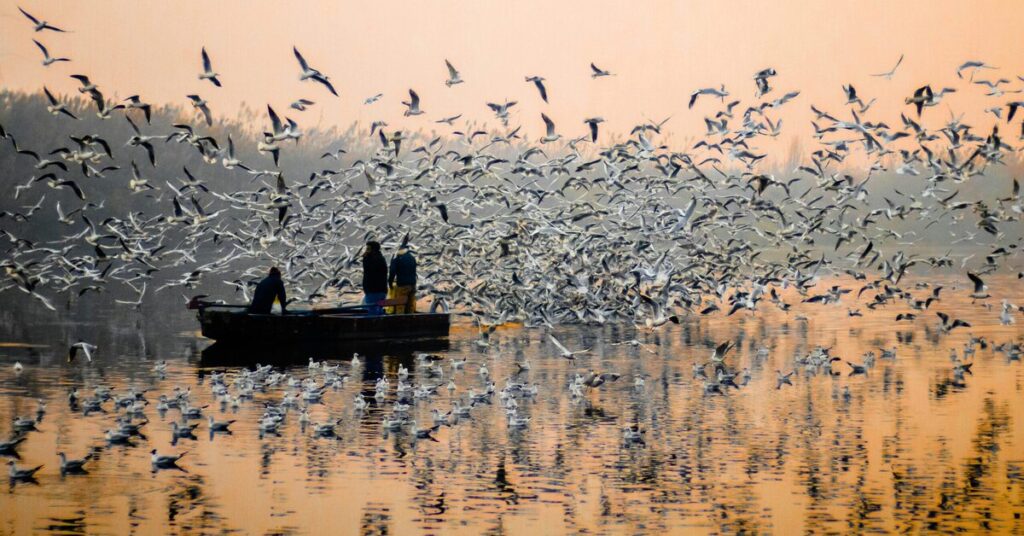
Let’s start with the crown jewel of Prayagraj—the Triveni Sangam. This isn’t just any river confluence; it’s where the mighty Ganges, Yamuna, and the mythical Saraswati rivers meet. Can you picture the spiritual energy of millions of devotees who’ve taken holy dips here over millennia?
The Sangam is considered one of the holiest sites in Hinduism. Pilgrims believe that bathing here washes away sins and brings salvation. You’ll see boats ferrying visitors to the exact point where the muddy Ganges meets the clearer Yamuna—the visual distinction is absolutely fascinating! The best time to visit is early morning when the sun rises over the waters, creating a golden spectacle that’s nothing short of magical.
During the Kumbh Mela, this place transforms into humanity’s largest gathering. But even on regular days, the Sangam buzzes with priests performing rituals, vendors selling religious items, and devotees immersed in prayer. It’s an experience that transcends religious boundaries and speaks to the human spirit.
Allahabad Fort: A Mughal Marvel
Standing tall on the banks of the Yamuna, the Allahabad Fort is Emperor Akbar’s architectural gift to this sacred city. Built in 1583, this massive fort isn’t just about walls and towers—it’s a testament to Mughal military genius and aesthetic sensibility.
What makes this fort special? Inside its walls, you’ll find the Patalpuri Temple and the famous Akshayavat (the immortal banyan tree), both considered extremely sacred. The fort also houses the Ashoka Pillar, inscribed with edicts from Emperor Ashoka dating back to 232 BCE. Talk about standing in the presence of history!
Unfortunately, parts of the fort are still used by the Indian Army, so access is limited. But what you can see is absolutely worth it. The Zenana quarters, the architectural details, and the sheer scale of construction will leave you awestruck. Pro tip: carry your ID for entry, and visit during cooler hours as the fort grounds can get quite hot.
Anand Bhavan: Legacy of the Nehru Family
Want to walk through India’s independence movement? Head straight to Anand Bhavan, the ancestral home of the Nehru-Gandhi family. This isn’t just a museum—it’s where history was made, where strategies were discussed, and where some of India’s greatest leaders once lived.
The mansion has been converted into a museum showcasing personal belongings, photographs, and memorabilia of Jawaharlal Nehru, India’s first Prime Minister, and his family. You’ll see Indira Gandhi’s bedroom, the room where Nehru was born, and countless artifacts that bring India’s freedom struggle to life.
What struck me most about Anand Bhavan is how it humanizes these larger-than-life figures. You see their everyday objects, their letters, their choices. Adjacent to it is Swaraj Bhavan, which was gifted to the nation by Motilal Nehru. Together, these buildings offer an intimate glimpse into the lives of those who shaped modern India.
Khusro Bagh: Gardens of Tranquility
Need a peaceful escape from the city’s hustle? Khusro Bagh is your answer. This walled garden complex houses three ornate Mughal tombs and offers a green oasis right in the heart of Prayagraj.
The tombs belong to Prince Khusrau (Emperor Jahangir’s eldest son), his mother Shah Begum, and his sister Sultan Nithar Begum. The Indo-Saracenic architecture is stunning, with intricate carvings and beautiful domes that reflect the Mughal aesthetic at its finest. The gardens surrounding the tombs are well-maintained, perfect for morning walks or quiet contemplation.
What I love about Khusro Bagh is its dual nature—it’s historically significant yet wonderfully serene. While tourists visit for the tombs, locals come here for morning jogs, yoga sessions, and family picnics. It’s where history and everyday life coexist beautifully.
All Saints Cathedral
Surprised to find a Gothic cathedral in this ancient Hindu city? That’s the beauty of Prayagraj’s diversity! The All Saints Cathedral, built in 1887, stands as a magnificent example of British colonial architecture in India.
Designed by Sir William Emerson (who also designed the Victoria Memorial in Kolkata), this cathedral features stunning stained glass windows, towering spires, and an interior that could rival European churches. The Gothic Revival style, with its pointed arches and ribbed vaults, creates an atmosphere of quiet reverence.
Whether you’re religious or not, the cathedral’s architectural beauty is undeniable. The play of light through the stained glass, the echo of your footsteps in the vast hall, and the sheer craftsmanship make it worth visiting. It’s also an active place of worship, so you might catch a service or choir practice, adding to the authentic experience.
Chandrashekhar Azad Park (Company Garden)
History and recreation blend seamlessly at this sprawling 133-acre park, formerly known as Alfred Park. But its claim to fame isn’t just the greenery—this is where freedom fighter Chandrashekhar Azad made his last stand against the British in 1931.
The park features a memorial to Azad at the exact spot where he was martyred, a poignant reminder of India’s struggle for independence. Beyond its historical significance, it’s a fantastic place for families, with manicured lawns, a beautiful Victoria Memorial, and the Prayagraj Public Library.
Morning joggers, evening walkers, and families with children flock here daily. You’ll find vendors selling snacks, children playing cricket, and couples enjoying quiet moments under ancient trees. It’s where Prayagraj comes to breathe and remember.
Hanuman Mandir: A Temple of Devotion
Here’s something you won’t see elsewhere—a reclining Hanuman idol! The Hanuman Mandir near Sangam is unique because the idol lies in a reclining position, and during the monsoon season, when the river swells, the temple gets partially submerged.
Legend has it that this temple has stood here for centuries, and the idol was discovered by local devotees. What’s fascinating is watching devotees wade through waist-deep water during floods to offer prayers—such is their faith and devotion.
The temple buzzes with activity, especially on Tuesdays and Saturdays, considered auspicious for Hanuman worship. The energy is palpable, with chants of “Jai Bajrang Bali” filling the air. Even if you’re not religious, the architectural style and the devotion you witness make it a worthwhile visit.
Alopi Devi Mandir: The Mysterious Temple
Want to visit a temple with no idol? Head to Alopi Devi Mandir, one of the 51 Shakti Peethas where, according to Hindu mythology, body parts of Goddess Sati fell. What makes this temple extraordinary is that instead of an idol, devotees worship a wooden chariot (doli).
The temple’s unique tradition centers around this doli, believed to represent the goddess. During the Kumbh Mela, this temple sees an enormous influx of pilgrims. The architecture is relatively simple, but the spiritual significance is profound.
The temple’s name “Alopi” means “the one who disappeared,” referring to the legend that the fingers of Goddess Sati disappeared here. The rituals and prayers here are different from typical Hindu temples, offering visitors a glimpse into the diverse worship traditions within Hinduism.
Patalpuri Temple and Akshayavat
Hidden within the Allahabad Fort lies one of Hinduism’s most sacred secrets—the Patalpuri Temple and the Akshayavat, or immortal banyan tree. This underground temple is believed to be the original tree mentioned in Hindu scriptures that never dies.
According to mythology, the Akshayavat has witnessed several cycles of creation and destruction. Chinese traveler Hiuen Tsang mentioned this tree in his 7th-century writings, attesting to its ancient importance. Though you can’t see the actual tree (it’s in a restricted area), the temple dedicated to it attracts countless devotees.
The underground nature of the temple adds to its mystique. As you descend into the temple complex, you feel like you’re entering a different realm altogether—one where time stands still and ancient energies still pulse.
Bharadwaj Ashram
On the banks of the Sangam sits the Bharadwaj Ashram, named after Sage Bharadwaj who supposedly meditated here thousands of years ago. This ashram holds special significance as it’s mentioned in the Ramayana—Lord Rama, along with Sita and Lakshmana, is believed to have rested here during their exile.
The ashram maintains a peaceful atmosphere perfect for meditation and reflection. You’ll find devotees performing rituals, sadhus in meditation, and pilgrims seeking blessings. The simplicity of the ashram, with its basic structures and spiritual focus, offers a stark contrast to the grandeur of other monuments in Prayagraj.
What I appreciate about Bharadwaj Ashram is its authenticity. It hasn’t been commercialized or turned into a tourist trap—it remains a genuine spiritual center where seekers come for inner peace.
Kumbh Mela: The Grand Spectacle
You can’t talk about Prayagraj without mentioning the Kumbh Mela, the world’s largest peaceful gathering of humans! Held every 12 years (with smaller versions every 6 years), the Kumbh transforms Prayagraj into a temporary city hosting tens of millions of pilgrims.
Imagine a sea of humanity stretching as far as the eye can see, all gathered for a holy dip at the Sangam. Sadhus from remote Himalayan caves, international tourists, researchers, and ordinary devotees all converge here. The scale is mind-boggling—temporary bridges, pontoon crossings, massive tent cities, and elaborate security arrangements spring up to accommodate the crowds.
Even if you’re not deeply religious, the Kumbh Mela is a cultural and sociological phenomenon worth experiencing. The colors, the rituals, the devotion, the sheer human energy—it’s unlike anything else on Earth. The last Kumbh in 2019 saw over 150 million visitors!
Best Time to Visit Prayagraj
Timing your visit to Prayagraj can make or break your experience. The best time is between October and March when the weather is pleasant and comfortable for sightseeing. Temperatures range from 10°C to 25°C, perfect for exploring outdoor attractions.
Avoid the scorching summer months (April to June) when temperatures can soar above 45°C—trust me, it’s brutal! The monsoon season (July to September) brings relief from the heat but can disrupt travel plans with heavy rains and flooding.
If you want to experience the Kumbh Mela, plan accordingly—it happens every 12 years, with the Ardh Kumbh (half Kumbh) every 6 years. The Magh Mela, a smaller annual fair held in January-February, is also worth experiencing if you miss the Kumbh.
How to Reach Prayagraj
Getting to Prayagraj is easy, thanks to excellent connectivity. The city has its own airport, Prayagraj Airport (formerly Bamrauli Airport), with flights connecting to major Indian cities like Delhi, Mumbai, and Bangalore. However, flight frequency is limited, so book in advance.
The railway station, Prayagraj Junction, is one of India’s major rail hubs with trains connecting to virtually every corner of the country. If you’re coming from nearby cities like Varanasi (130 km) or Lucknow (200 km), trains are your best bet.
By road, Prayagraj is well-connected via National Highways. The Yamuna Expressway connects it to Delhi and Agra, making road trips convenient. State transport buses, private buses, and taxis are readily available.
Once in the city, auto-rickshaws, cycle-rickshaws, and app-based cabs make local transportation hassle-free. Renting a car with a driver for the day is also economical if you’re planning to cover multiple attractions.
Where to Stay in Prayagraj
Prayagraj offers accommodation options for every budget. For luxury seekers, properties like Hotel Kanha Shyam and The Legend Hotel provide comfortable rooms with modern amenities. These typically cost between ₹3,000-6,000 per night.
Mid-range hotels like Hotel Presidency, Treebo Hotels, and Milan Palace offer good value for money, with clean rooms and basic amenities at ₹1,500-3,000 per night. They’re perfect if you’re looking for comfortable stays without breaking the bank.
Budget travelers will find numerous guesthouses and dharamshalas near the Civil Lines area and around Sangam, costing as little as ₹500-1,000 per night. During the Kumbh Mela, temporary tent accommodations become available, offering a unique camping experience.
Location-wise, staying near Civil Lines gives you access to major attractions, restaurants, and shopping areas. If spirituality is your focus, accommodations near the Sangam put you close to the action.
Local Cuisine You Must Try
Your Prayagraj experience is incomplete without savoring its street food! Start with the famous Loknath Chaat, a sweet-tangy explosion of flavors that locals swear by. The golgappas (pani puri) here have a distinctive taste—the tamarind water has that perfect balance of sweet and spicy.
Don’t miss the kachoris at Netram, a legendary eatery that’s been serving crispy, spicy kachoris for decades. Pair them with potato curry and you’ve got yourself a breakfast of champions! For something sweet, try the malaiyo—a winter specialty that’s like eating sweetened air, available only from December to February.
The petha from Prayagraj might not be as famous as Agra’s, but it’s equally delicious. And if you’re adventurous, try the matar ki chaat or the samosa chat from street vendors—just make sure you choose busy stalls where food turnover is high.
For proper meals, restaurants serve traditional North Indian thalis, Mughlai cuisine, and even South Indian dishes. El Chico and Coffee Day serve good continental food if you need a break from Indian flavors.
Conclusion
Prayagraj isn’t just a destination; it’s a journey through time, faith, and culture. From the sacred waters of Triveni Sangam to the historical grandeur of Allahabad Fort, from the revolutionary spirit of Anand Bhavan to the architectural beauty of All Saints Cathedral—this city offers layers of experiences waiting to be discovered.
Whether you come as a pilgrim seeking spiritual solace, a history enthusiast tracing India’s past, or a curious traveler exploring new horizons, Prayagraj welcomes you with open arms and countless stories. The city’s ability to seamlessly blend ancient traditions with modern life, Hindu spirituality with Mughal architecture, and local charm with historical significance makes it truly special.
So pack your bags, book that tour package, and get ready to create memories that’ll last a lifetime. Prayagraj is calling—will you answer?
FAQs
1. How many days are enough to explore Prayagraj?
Ideally, 2-3 days are sufficient to cover the major attractions comfortably. If you’re visiting during the Kumbh Mela, you might want to extend your stay to 4-5 days to fully experience the festivities without rushing.
2. Is Prayagraj safe for solo female travelers?
Yes, Prayagraj is generally safe for solo female travelers, especially in tourist areas and during daylight hours. However, like any city, exercise normal precautions—avoid isolated areas after dark, dress modestly given the religious significance of the city, and use reputable transportation services.
3. What should I wear when visiting temples in Prayagraj?
Modest clothing is recommended out of respect for the religious sentiments. For men, full-length trousers and shirts are appropriate. Women should wear clothing that covers shoulders and knees—salwar kameez, long skirts with tops, or sarees work perfectly. Some temples may require you to remove footwear.
4. Can I take a dip at the Sangam if I’m not Hindu?
Absolutely! The Sangam welcomes everyone regardless of religion or nationality. Many non-Hindu visitors take a holy dip as a cultural experience. Just be respectful of the religious significance, follow local customs, and consider hiring a local guide or boatman who can assist you safely.
5. Are there any restrictions during the Kumbh Mela?
During Kumbh Mela, expect massive crowds and plan accordingly. Certain areas may have restricted access on auspicious bathing days. Alcohol is prohibited, and security is tight. Book accommodation well in advance as the city reaches maximum capacity. Follow all guidelines issued by authorities for a safe and enriching experience.





[…] real-time arrival updates. Groups planning extended stays often combine arrival packages with our Prayagraj Tour Packages for next-day Triveni Sangam visits or Chitrakoot Tour Packages exploring Ram’s forest […]